

Top 10 Food and Beverage Consulting Services Providers - 2024
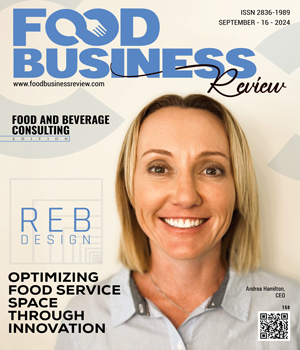
Food and Beverage Consulting - 2024
Nominate a Company
Usually, the qualified subscribers of our magazine nominate companies with whom they have collaborated and experienced exceptional results to be in this list. Did a company you recently worked with give you stellar results and ROI? Did it turn out to be one you would wholeheartedly recommend to peers? Or do you know of such an outstanding company through your network? Please fill in the details below and nominate them to be featured here.

Top Food And Beverage Consulting Services Providers

REB Design is a designing and consulting firm at the forefront of the commercial food service design industry. It caters to restaurants, cafeterias, retirement homes and food halls by following an innovative client-centric approach. The firm creatively designs functional as well as transformative solutions that meet and exceed client expectations and industry trends. ... read full profile

Foodesign Associates has been recognized as Food And Beverage Consulting Services Providers - 2024 by Food Business Review. ... read full profile
BD Food Safety Consultants
BD Food Safety Consultants delivers expert food safety services, offering comprehensive training in HACCP, PCQI, FSVP, IAVA, and Internal Auditor certifications, recognized by the FDA, USDA, and GFSI. Their consulting covers regulatory compliance and GFSI audit preparations, backed by over 45 years of combined experience.
Burdock Group
Burdock Group is an international consulting firm specializing in safety and regulatory compliance across industries like food, beverage, dietary supplements, and more. With over 30 years of experience and expertise in FDA, EPA, and USDA regulations, they have successfully guided thousands of businesses to market.
Food Safety & Quality Services
Food Safety & Quality Services is a provider of food safety and quality training and consulting. Their aim is to help clients navigate the requirements of an increasingly regulated food economy through worldclass food safety and quality training, and by offering professional consulting services for regulatory and third-party audit compliance.
Kellerman Consulting
Kellerman Consulting, a family-owned company, provides expert food safety and ISO 9001 consulting. With a nationwide team of full-time consultants, they have assisted over 700 clients in writing and implementing certification programs. Their proven process ensures clients pass audits on the first try.
KTL
KTL assists companies in managing operational risks, meeting food safety regulatory standards, and achieving sustained business value. With a team of senior consultants boasting over 15 years of experience, KTL excels in developing FSQA programs and driving certification and compliance across the global food supply chain.
NGAssociates Foodservice Consultants
NGAssociates Foodservice Consultants offers a creative and experienced approach to foodservice consulting and design, featuring global perspectives. Their services include Revit 3D design, master planning, RFPs, design guides, and real estate due diligence. With expertise across all food industry sectors, they focus on sustainability and enhancing both guest experiences and work environments.

Pentallect
Pentallect is a boutique food industry consulting firm specializing in business and strategic planning, M&A due diligence, go-to-market effectiveness, and supply chain optimization. Serving manufacturers, distributors, restaurant chains, and private equity firms, Pentallect’s partners offer deep expertise from executive roles across diverse market segments.
Safe Food Alliance
Safe Food Alliance delivers innovative solutions for food safety and quality professionals. They offer cuttingedge laboratory testing, immersive training, and expert consulting, driven by a commitment to safety. Their aim is to empower individuals to ensure the production of safe, high-quality food for communities.
Food and Beverage Consulting Info
Q1
What Do Top Food Ingredients Companies Do?
Top Food Ingredients Companies develop and supply the functional components that make packaged foods stable, safe and repeatable at scale. That includes emulsifiers that keep sauces from separating, proteins that hold texture in plant-based products and preservation systems that extend shelf life without obvious additives. Their work sits between product concept and factory output. A formula that works in a test kitchen can fail on a production line. Ingredient suppliers adjust formulations so they survive heat, mixing speeds, packaging and transport without breaking down.
Q2
Why Does the Category Matter Right Now?
Pressure is coming from reformulation demands and supply volatility at the same time. Top Food Ingredients Companies are being asked to reduce sugar, replace animal proteins and simplify labels without changing taste or shelf life. Small formulation shifts can trigger labeling changes or processing issues. A minor pH change can alter texture or stability. Demand is also moving toward traceable sourcing and consistent quality across batches. When ingredients vary, production slows or stops. That risk has pushed ingredient selection into product strategy rather than routine procurement.
Q3
How Should Manufacturers Evaluate Food Ingredients Companies?
Spec sheets are not enough. Manufacturers should test ingredients under real production conditions—heat profiles, mixing speeds and storage time. A sample that performs in a lab can separate or degrade at scale. It helps to review how suppliers support troubleshooting when batches behave differently. Ask for application testing, documentation and clear escalation paths. Also check batch consistency across shipments. Inconsistent inputs force constant line adjustments. A practical test is to run a pilot batch and track texture, yield and stability over time, not just at initial output.
Q4
What Value Do Top Food Ingredients Companies Deliver to Food Brands?
The value shows up in fewer production disruptions and more predictable products on shelves. Well-designed ingredient systems reduce rework, waste and customer complaints tied to texture or flavor drift. Top Food Ingredients Companies also help bridge the gap between concept and manufacturable product. Many products fail during scale-up when lab results don’t translate to factory conditions. The right partner reduces that drop-off. For brands, that means steadier production runs, fewer returns and less time spent correcting batches that don’t meet specification.
Q5
How Are Innovation and Technology Shaping Food Ingredients Companies?
Innovation is focused on formulation science and compatibility across different products. Food ingredients companies are building systems that work in multiple applications, which reduces the need for separate formulas. There is steady development in plant-based proteins, alternative sweeteners and functional fibers that replicate familiar textures. Digital tools are used to model formulations, but physical testing still decides outcomes. Food systems are sensitive to small changes. A slight shift in temperature or acidity can change the result, so pilot trials remain central before full-scale adoption.
Q6
What Should Manufacturers Prioritize When Comparing Top Food Ingredients Companies?
Reliability, technical support and formulation fit usually matter more than price. Top Food Ingredients Companies that can support scale-up and respond quickly to production issues reduce downtime risk. Manufacturers should look at how suppliers handle supply disruptions, documentation and reformulation under new labeling rules. It is also worth checking how quickly they can adjust a formula when inputs change. A delayed shipment or inconsistent batch can stop a production line. That cost typically outweighs small differences in ingredient pricing.
